
FernLeaf Creek Week 2026

Cane Creek Health Report: Hope After the Storm
For the first time since Hurricane Helene, FernLeaf held their annual field study of Cane Creek. Uncertain of the storm's long-term effects on the waterway's ecology, event founder and FernLeaf Experiential Education Teacher, Ryan Lubbers, guided K-4 students in collecting data. Ryan and his citizen scientists are happy to report that the creek is healthy and thriving with sensitive creatures!

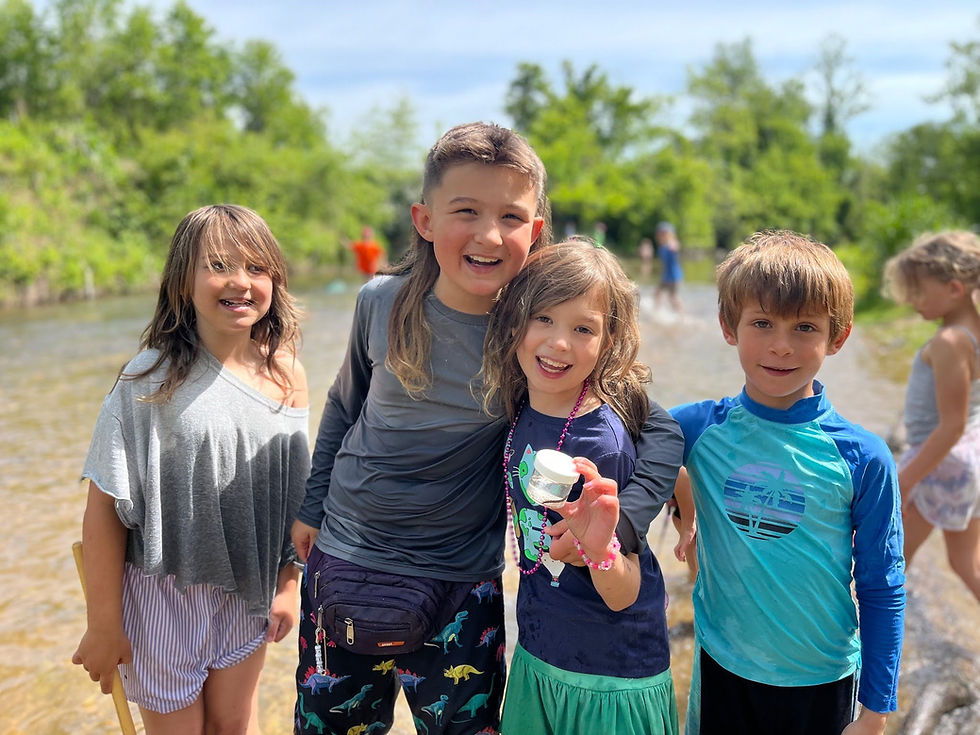
In early May of 2026, the FernLeaf community came together for our annual river study known as “Creek Week.” Over 500 students, staff, and parent volunteers waded into the waters of Cane Creek on our campus in Fletcher, NC, to act as citizen scientists. Our goal was simple but vital: to check on the health of our creek following the catastrophic flooding caused by Hurricane Helene. By looking at the macroinvertebrates (small water bugs) living in the stream, we can get a clear picture of the water quality.
The science: What is a biotic index?
Think of these water bugs as "canaries in a coal mine." Some bugs are very sensitive and can only live in clean water, while others are tough and can survive in polluted or disturbed areas. By counting the different types of bugs we find, we can calculate a Pollution Tolerance Index Score.
Our findings
Based on the data collected by our young scientists, here is how Cane Creek scored:
Group category | Biodiversity found | Key species spotted |
Group 1: Sensitive 3 points each | 4 Taxa (biological groups) | Mayflies, Stoneflies, Caddisflies, Dobsonflies |
Group 2: Moderate 2 points each | 7 Taxa | Dragonflies, Crane Flies, Crayfish, Freshwater Limpets, Whirligig Beetle, Damselfly, Freshwater Mussels |
Group 3: Tolerant 1 point each | 5 Taxa | Midge Larva, Planarians, Leeches, Aquatic Worms, Left-handed Snails |
Total Pollution Tolerance Index Score: 31 Water Quality Rating: EXCELLENT
Stonefly Larva, Mayfly Larva, and Dragonfly Larva inhabit Cane Creek.

In addition to macroinvertebrates, we also documented a variety of other river animals (listed below). This rich diversity is more evidence of a thriving ecosystem!
Amphibians
Two-lined Salamander
Bullfrog Tadpole
Fish
Green Sunfish
Brook Lamprey
Rainbow Trout
War Paint Shiner
Tennessee Shiner
White-tail Shiner
River Chub
Creek Chub
Stone Roller
Redline Darter
Gilt Darter
Banded Darter
Fantail Darter
Redhorse Sucker
Reptiles
Red-eared Slider
Snapping Turtle
Northern Watersnake
Birds
Great Blue Heron
Kingfisher
Mallard
Cormorant
Spotted Sandpiper
FernLeaf student meets a Red-eared Slider Turtle. Right: A Redline Darter Fish is measured.
Why this matters: A story of resilience
The most incredible part of this score is the context. After the extreme flooding of Hurricane Helene, many feared that the delicate ecosystems of our local waterways would be wiped out. Heavy flooding can "scour" a creek bed, removing the rocks and vegetation these bugs call home. In addition, pollution can quickly wipe out an entire generation of aquatic organisms with no safe place to escape. However, our data shows a different story:
The return of the "big three": Finding Mayflies, Stoneflies, and Caddisflies (the Group 1 "Sensitive" bugs) is a huge win. These bugs require high oxygen and very clean water. Their presence proves that Cane Creek’s water quality remains excellent.
Biodiversity: With 16 different types of invertebrates identified as well as a variety of fish, reptiles, amphibians and bird life, the creek is not just surviving; it is a thriving, diverse ecosystem.
Small wonders: Students found so many tiny, seldom seen aquatic animals, showing that even the smallest river residents managed to endure the storm and return to their habitats.

A message for the FernLeaf family
To our parents and community: This "Excellent" rating is a testament to the resilience of our local environment. While the landscape around us has changed, the flowing waters of the creek remain healthy.
To our students: Your hard work this week proved that nature is resilient! By carefully identifying everything from the mighty Dobsonfly (Hellgramite) to the tiny Limpet, you’ve helped us document a beautiful story of recovery.
A healthy Cane Creek is more than just water flowing through our campus; it is a sign of hope for our community as we continue to grow and recover together. Thank you to all the students, staff, and volunteers who made Creek Week possible!


